

Turning Black Plastic Recycling into Reality
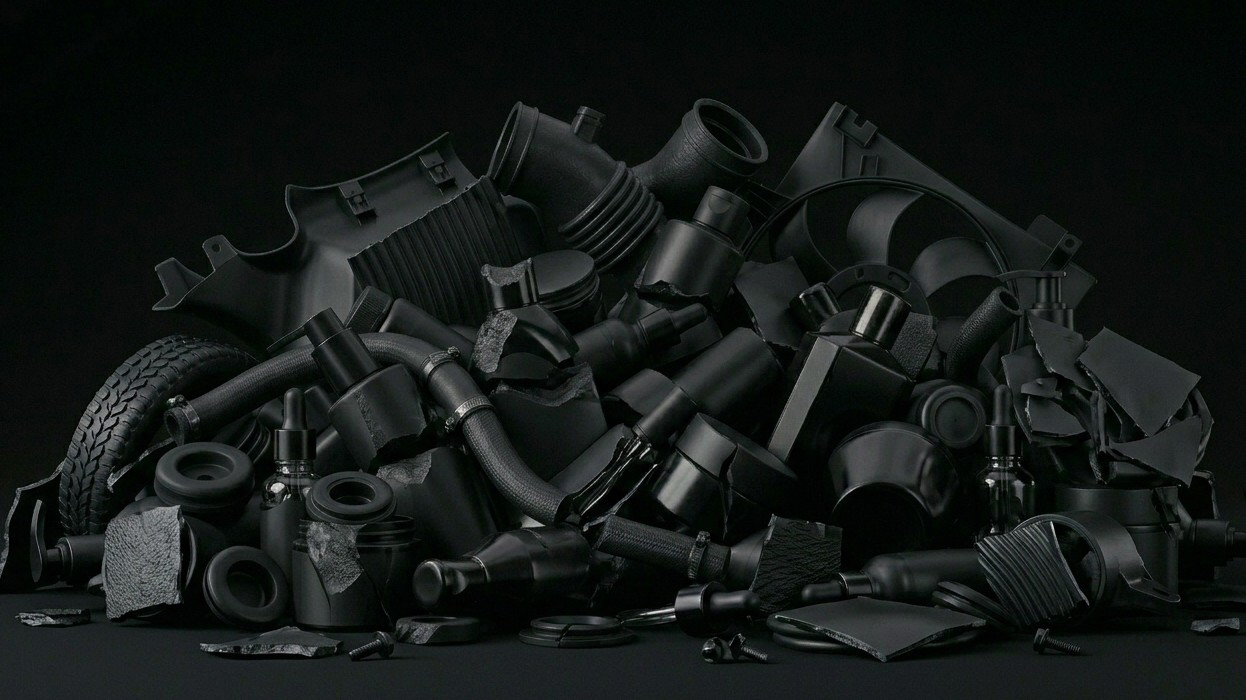
At first glance, black plastics appear elegant, modern, and practical. They are found in numerous everyday products—from packaging and car parts to electronic housings.
However, these very products pose a significant challenge for the recycling industry: While many plastics can now be efficiently sorted and recycled, black plastics often completely evade this process and end up being discarded. But why is that?
The Technical Challenge of Sorting
In most recycling facilities, plastics are sorted automatically using near-infrared (NIR) sensors. This technology identifies materials by detecting light reflections in the infrared spectrum. Different types of plastics reflect light in unique ways, allowing the system to identify and separate them effectively.
Black plastics often contain carbon black, which makes them challenging for NIR sensor systems to detect accurately and sort by type (PE, PP, ABS, etc.). As a result, carbon black plastics are typically removed during sorting, causing mixed fractions to be discarded as waste.



Why are black plastics still used?
Plastic processors using black plastics are familiar with the aforementioned challenges. Yet, black plastics remain widely used.
Here are several reasons:
- Aesthetic: Black exudes a premium and timeless appeal.
- Color Coverage: Black pigments in plastic can conceal impurities or variations in material composition.
- Cost: Carbon Black is an affordable and effective pigment.
- UV Resistance: Black pigments, especially Carbon Black, offer excellent UV protection. They prevent premature aging, brittleness, or fading of plastics. Additionally, they protect the contents, as black packaging – like bottles – effectively blocks UV radiation.
The Impact on Recycling
The inability to reliably sort black plastics leads to several negative consequences:
- Lower Recycling Rates: Black plastics often go undetected, resulting in mixed batches being discarded or incinerated.
- Loss of Raw Materials: Valuable materials are lost instead of being reused in the cycle.
- Increased Environmental Impact: Incineration generates additional CO₂ and other emissions.
- Reduced Profitability: The purity and quality of usable material decrease, leading to lower selling prices.
Innovation: The Key to Material Detection
The good news: Promising methods already exist for recycling black plastics, such as using alternative color pigments or designing for recyclability. However, enhanced sorting technologies play a crucial role. Camera-based solutions will soon enable the reliable identification of even highly absorbent materials.
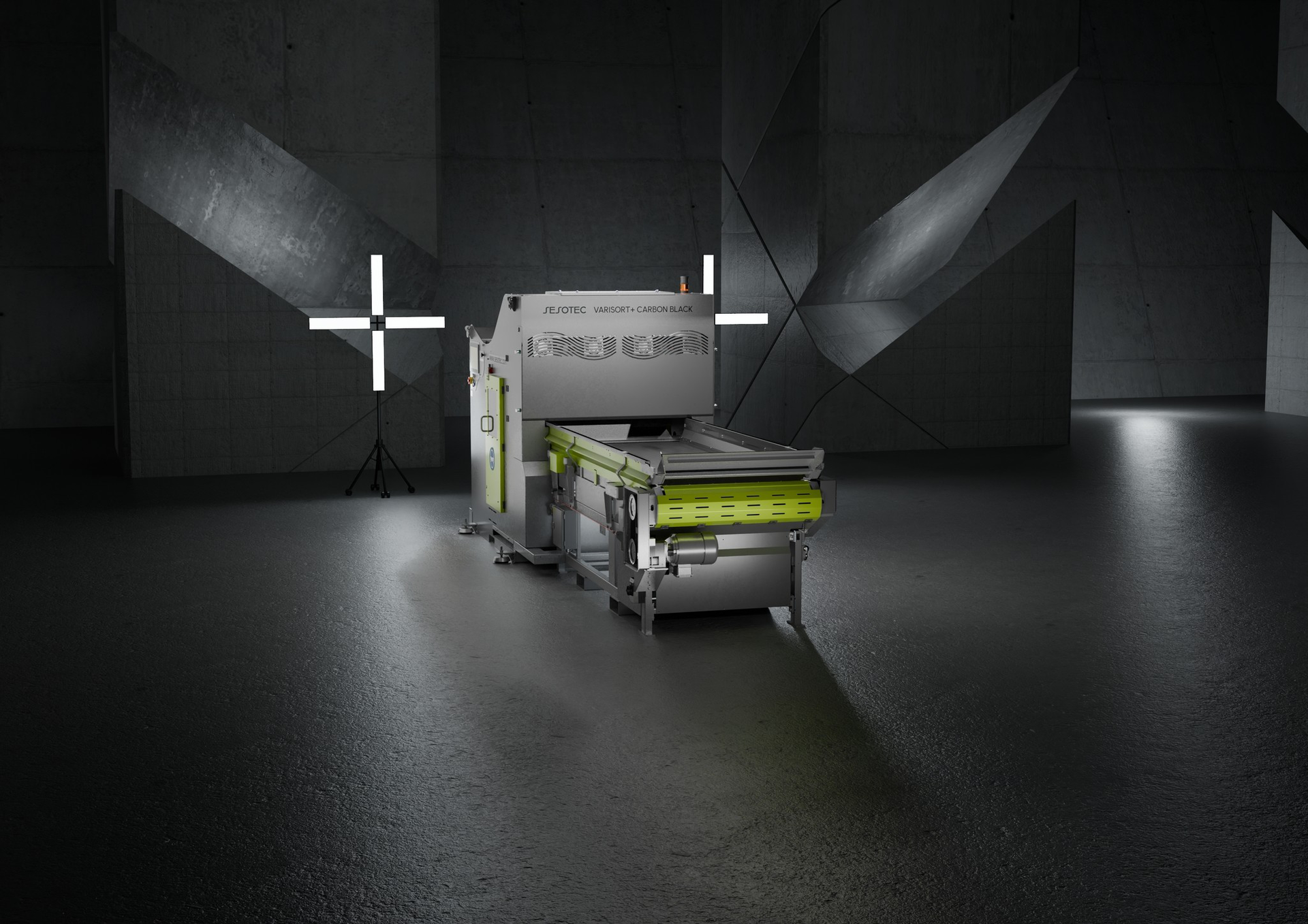
Sesotec bridges a significant technological gap in plastic recycling by expanding its sensor portfolio with Mid-Wave Infrared (MWIR) technology. VARISORT+ sorting systems allow for the reliable detection and precise separation of larger black plastic pieces early in the recycling process, eliminating the need for sorting at the flake stage.
What detection method is used
With the introduction of Mid-Wave Infrared (MWIR) technology, Sesotec strategically expands its sensor portfolio to include a crucial wavelength range essential for reliably detecting black plastics.
A key advantage: The new camera-based technology integrates seamlessly into existing systems. Proven software, established algorithms, and existing AI models can continue to be utilized. This is all built on Sesotec's extensive experience in spectral analysis, ensuring secure and precise material classification.
The result is a powerful comprehensive solution where innovative camera technology meets tried-and-tested evaluation methods – minimizing the risk of implementation.
Technology Overview
- New wavelength range for reliable detection of black plastics
- Utilize existing software, algorithms, and AI models
- High classification accuracy through years of spectral analysis expertise
- Low implementation risk with proven evaluation methods
MWIR technology is more than just a new sensor: it combines camera, lighting, intelligent software, and extensive application experience into a perfectly tailored solution for precise and reliable sorting of black plastics.
How does MWIR technology work?
MWIR (Mid-Wave Infrared) leverages infrared radiation in the mid-wavelength range to identify materials by their molecular signatures.
Why it works for black plastics:
- Black plastics absorb visible light, leaving traditional cameras/NIR without reflections to capture
- In the MWIR range, plastics still exhibit distinctive absorption and emission spectra
How it works:
- Plastic is illuminated with infrared radiation.
- The material absorbs specific wavelengths, depending on its chemical structure.
- An MWIR sensor measures the reflected/emitted spectrum.
- Software compares the signal with known patterns.
The type of plastic is classified (e.g., PE, PP, ABS).
What's new or improved in technology
The innovation lies primarily in the camera technology (MWIR wavelength range) – its true power is unleashed when combined with established AI, software, and the new wavelength range.
- Enhanced differentiation of highly absorbent carbon black plastics
- Integration of AI & spectral analysis
Solution Comparison:
| Previous NIR Technologies | New Approach with MWIR Technology |
| Often fail to identify black plastics by material | Identifies black plastics by specific material (PE, PP, ABS, etc.) |
| → Quality loss, material waste | → Economically viable black recyclates |
Enhancements with MWIR Technology
- Black plastics are sorted by type
- Significant increase in material value
- Avoidance of thermal recovery
- Substitution of new materials with high-quality recyclate
- Reduced use of primary raw materials
- Resource conservation
- Increased yield of usable fractions
- Reduced sorting losses
- More consistent material flow quality
Economic Benefits for Recyclers
- Unlock new material streams
- Higher sales price for pure recyclate
- Lower disposal costs
- Enhanced compliance with regulations
- Competitive edge through technological leadership
Conclusion
Sorting black carbon-black plastics has long been considered an insurmountable technical challenge. Even the most advanced recycling facilities struggle with these materials. However, tangible solutions are now emerging: cutting-edge technologies are increasingly capable of reliably separating black plastics by type, significantly enhancing their recyclability.
These advancements lead to a substantial increase in recoverable materials, allowing previously lost resources to re-enter the cycle. This brings clear ecological benefits: by avoiding thermal disposal, substituting new materials with high-quality recyclates, and reducing the use of primary raw materials, CO₂ emissions can be significantly lowered and resources conserved. At the same time, material efficiency improves through higher yields of usable fractions, reduced sorting losses, and more stable material flow quality.
There are also clear economic opportunities for recyclers. New technologies unlock additional material fractions, enable higher selling prices for pure recyclates, and simultaneously reduce disposal costs. Moreover, they support compliance with regulatory requirements and create competitive advantages through technological leadership.
The path to a true circular economy requires not only further innovations but, above all, the consistent implementation of already available solutions. In many applications, black plastics remain practical or necessary—for example, for UV protection or to ensure specific material properties.
A sustainable future lies not in abstinence but in the strategic combination of innovative materials, adapted design, and powerful sorting technology. This ensures that black plastics no longer end up as waste in incineration but remain valuable resources and are utilized as high-quality secondary raw materials.